Over the past year, MSN has been working with coalitions of women’s and trade union organizations in El Salvador and Honduras on the right of working parents in the maquila sector to access quality affordable childcare for.
As part of that effort, MSN has been facilitating dialogue on the issue between the local organizations and international brands that are part of the multi-stakeholder Americas Group and whose products are made in one or both countries.
Shortly after a devastating earthquake hit Mexico on September 19, MSN received several phone calls and emails from friends and supporters concerned about the safety of members of our staff who were meeting in Mexico City on that day.
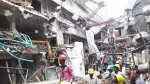
We are writing to provide an update on what we experienced, witnessed and learned regarding the impact of the earthquake on people in Mexico City, Morelos and Puebla and the courageous response of thousands of volunteers to this tragedy.
Honduras has the most extensive legal framework on childcare for working parents in Central America, setting out the responsibilities of both employers and the state to provide and monitor childcare services for workers.
However, employers in the maquila sector have attempted to use differences in various laws and regulations to argue that employers have no legal responsibility to provide or pay for workplace childcare.
This summary of studies and initiatives on workplace childcare in the garment export industry in Bangalore, India between 2009 and 2016 was prepared by MSN with the cooperation of Cividep India.
On August 30, Georgetown University and Nike announced they had signed a new licensing agreement that will give the Worker Rights Consortium (WRC) access to conduct inspections of working conditions in Nike supplier factories producing university-licensed products.
Report reveals that while 17 leading international apparel and footwear brands are or will meet minimum standards for supply chain transparency by the end of 2017, other major brands and retailers still have a lot of catching up to do.
A July 3 boiler explosion at the Multifabs Ltd. garment factory in Bangladesh has reinforced the need to expand the scope of the Accord on Fire and Building Safety to include boiler safety inspections. The deadly explosion killed at least 13 workers and injured dozens more.
On July 28, 2017, 14 international clothing brands and the Fair Labor Association (FLA) released a joint letter to the Mexican government declaring their support for a Constitutional Reform to Mexico’s labour justice system that could better protect workers’ right to freedom of association and to bargain collectively.
Today, MSN released a Briefing Paper entitled Labour Justice Reform in Mexico.
Based on MSN’s own research and in-depth interviews with 16 Mexican and international labour rights experts, the paper analyzes the Mexican government’s February 2017 reform to the country’s Constitution, which promises to provide better protections for the rights of workers to be represented by a union of their free choice and to bargain collectively.
On June 29, the global unions IndustriALL and UNI announced a new agreement with major apparel brands to renew the Bangladesh Accord on Fire and Building Safety for an additional three years.
Another devastating fire at a Bangladeshi textile mill reaffirms the needs to extend and expand the Bangladesh Accord on Fire and building Safety, due to end in May 2018.
On this, the fourth anniversary of the Rana Plaza tragedy, our thoughts are with the families of the 1,138 workers who were killed and more than 2,000 workers injured
A just-released report reveals that while 17 leading international apparel and footwear brands are or will meet minimum standards for supply chain transparency by the end of 2017, other major brands and retailers still have a lot of catching up to do.
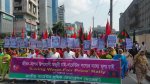
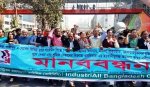
On February 23, Bangladeshi unions affiliated with IndustriALL Bangladesh Council reached an agreement with the Bangladesh Garment Manufacturers and Exporters Association (BGMEA) and the Ministry of Labour for the release on bail of the remaining union leaders still imprisoned for their alleged association with a wage strike in December 2016.
The Clean Clothes Campaign and International Labor Rights Forum announced today that because of continuing anti-union repression in Bangladesh, five major apparel brands – H&M, Inditex (Zara), C&A, NEXT and Tchibo – and the UK’s Ethical Trading Initiative have pulled out of the February 25 Dhaka Apparel Summit, which will be hosted by the Bangladesh Garment Manufacturers and Exporters Association (BGMEA).
Twenty-two human and labour rights organizations from around the world are calling on international apparel brands to press for the release of unjustly imprisoned Bangladeshi union leaders and worker rights advocates and the reinstatement of 1,500 workers suspended or terminated for taking part in a wage strike.
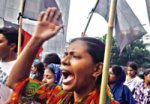
Since December 21, 2016, in the aftermath of a week of unrest by thousands of Bangladeshi garment workers striking for higher wages, the Bangladeshi authorities have arrested or detained at least 14 union leaders and worker rights advocates, and 11 currently remain in police custody.
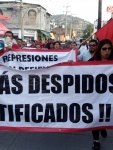
Twelve workers will have to serve more time under house arrest for taking part in a peaceful protest against the dismissal of their union representatives and unjust working conditions.
More than three and a half years after 1,134 workers died in the Rana Plaza building collapse, major apparel brands and retailers that are members of the Alliance for Bangladesh Worker Safety, including Walmart, Gap, Target, VF Corporation, and Canada’s Hudson’s Bay Company, are way behind in ensuring that their Bangladesh supplier factories are safe, says a new report from four labour rights organizations.
As part of our 2002 campaign for factory disclosure regulations, students cut out clothing labels and mailed them to the Canadian government
Two more major international apparel brands have joined the growing list of companies in the sector that are publicly disclosing information on their wholly-owned and supplier factories around the world.
Four years after more than 250 garment workers were killed and over 50 injured in a factory fire in Karachi, Pakistan, German retailer Kik has finally agreed to pay over US$5 million in compensation.
The Jesuit-affiliated Centre for Reflection and Action on Labour Issues (CEREAL) has just released its seventh annual report on working conditions in the Mexican electronics industry.
By the end of June 2016, US$2.17 million in compensation has been paid out to the survivors and family members of workers killed in the November 24, 2012 Tazreen garment factory fire in Bangladesh.
This workshop uses six scenarios based on real problems that workers and the organizations defending their rights face in factories. The goal is to develop participants’ capacity to decide when and how to engage with clothing brands. To read the scenarios presented to participants, click here:
The workshop Brands and Labour Rights: When and How to Engage with Brands was designed by Maquila Solidarity Network (MSN) as a tool for use by women’s and trade union organizations in Central America and Mexico in their work to pressure apparel brands to take action to achieve greater respect for labour rights in their supplier factories in the region.
Photo: Iniciativa Mesoamericana de Mujeres Defensoras de Derechos Humanos/Solidarity Center
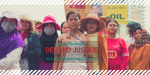
The Maquila Solidarity Network joins labour, human rights, women’s organizations in Guatemala and internationally in strongly condemning the murder of Guatemalan labour leader Brenda Marleni Estrada Tambito, and calls on the Guatemalan government to launch an immediate, thorough and impartial investigation into her assassination, bring those responsible to justice, and take appropriate measures to ensure the safety of members of her family.
April 24, 2016 was the third anniversary of the Rana Plaza building collapse, in which over 1,100 workers were killed and approximately 2,500 injured in the worst industrial disaster in the history of the garment industry.
Three years later, what has changed for the injured workers and the families of those who died, and for the young women and men who continue to work in the industry?
On April 10, 56 workers who for over five months had been camped outside the Lexmark factory in Ciudad Juarez, Mexico after being unjustly fired, ended their protest after reaching a settlement with their former employer.
Despite strong opposition from national unions and international labour rights organizations, on April 4 the Cambodian parliament approved a controversial new trade union law that greatly restricts workers’ right to freedom of association and collective bargaining and the right to strike.
As Swedish fashion giant H&M prepares to announce a predicted increase in their profits for 2015, labour rights groups are calling on the company to do more to protect garment workers in Bangladesh, after a review of H&M’s strategic suppliers shows that severe delays in carrying out urgent and vital building repairs continue to leave tens of thousands of workers at risk of death and injury.
MSN joins with a growing number of organizations and institutions throughout the Americas and around the world in condemning the assassination of internationally recognized Honduran human and indigenous rights defender and environmental activist, Berta Cáceres. We express our deeply felt condolences to the members of her family and community and we affirm our support for their continuing struggle.
Thirty-five organizations based in the US, Canada, Europe and Mexico have signed an Open Letter urging US-based print cartridge manufacturer, Lexmark, to reinstate workers fired for protesting unjust working conditions and attempting to organize an independent union at a Lexmark owned and operated factory in Ciudad Juarez, Mexico.
A fire at another Bangladesh factory producing clothes for H&M, JC Penney and other brands has reinforced serious concerns raised by MSN and other witness signatories to the Accord on Fire and Building Safety about long delays in required safety renovations at factories producing for US and European brands.
A worker rebellion in electronics maquila factories in Ciudad Juarez, Mexico is putting to the test the Mexican government’s promise to introduce reforms to better ensure workers’ right to be represented by a union of their free choice.
The Mexico Committee of the Americas Group has published a guidance tool for apparel brands on policies and actions to ensure respect for freedom of association in their Mexican supplier factories.
H&M is dramatically behind schedule in making fire and building safety repairs in it supplier factories in Bangladesh, says an October 1, 2015 report co-authored by the Clean Clothes Campaign (CCC), International Labor Rights Forum (ILRF), Worker Rights Consortium (WRC), and MSN.